
What Causes Bloating? Root Causes to Check

You wake up with a relatively flat stomach, eat what seems like a reasonable meal, and by late afternoon your pants feel restrictive. If you are asking what causes bloating, the answer is rarely as simple as “you ate too much.” Bloating is a signal that something in digestion, elimination, food tolerance, hormones, or the gut environment needs a closer look.
For too many people, the standard advice is to avoid beans, take an antacid, or accept bloating as normal. Occasional fullness after a large meal can be normal. Persistent bloating, painful distension, constipation, reflux, fatigue, brain fog, or unexplained weight loss resistance is not something to dismiss. Your body is giving you information. The question is whether anyone is investigating it.
What Causes Bloating? It Depends on the Pattern
Bloating describes the sensation of pressure, fullness, or abdominal swelling. Some people feel gassy but do not visibly distend. Others have a stomach that expands dramatically throughout the day. Those patterns matter because they can point toward different underlying contributors.
Gas production is one possibility, but it is not the only one. Bloating can also result from slow movement through the digestive tract, inflammation, fluid retention, altered gut bacteria, food reactions, or hormonal shifts. A plan that helps one person may do very little for another because the root cause is different.
That is why generic “gut-friendly” diets often fail. Removing every potentially irritating food without understanding why symptoms occur can leave you frustrated, underfed, and still bloated. We do not guess. We test, look at the pattern, and build a plan around what your body is actually dealing with.
Food Reactions and Fermentable Carbohydrates
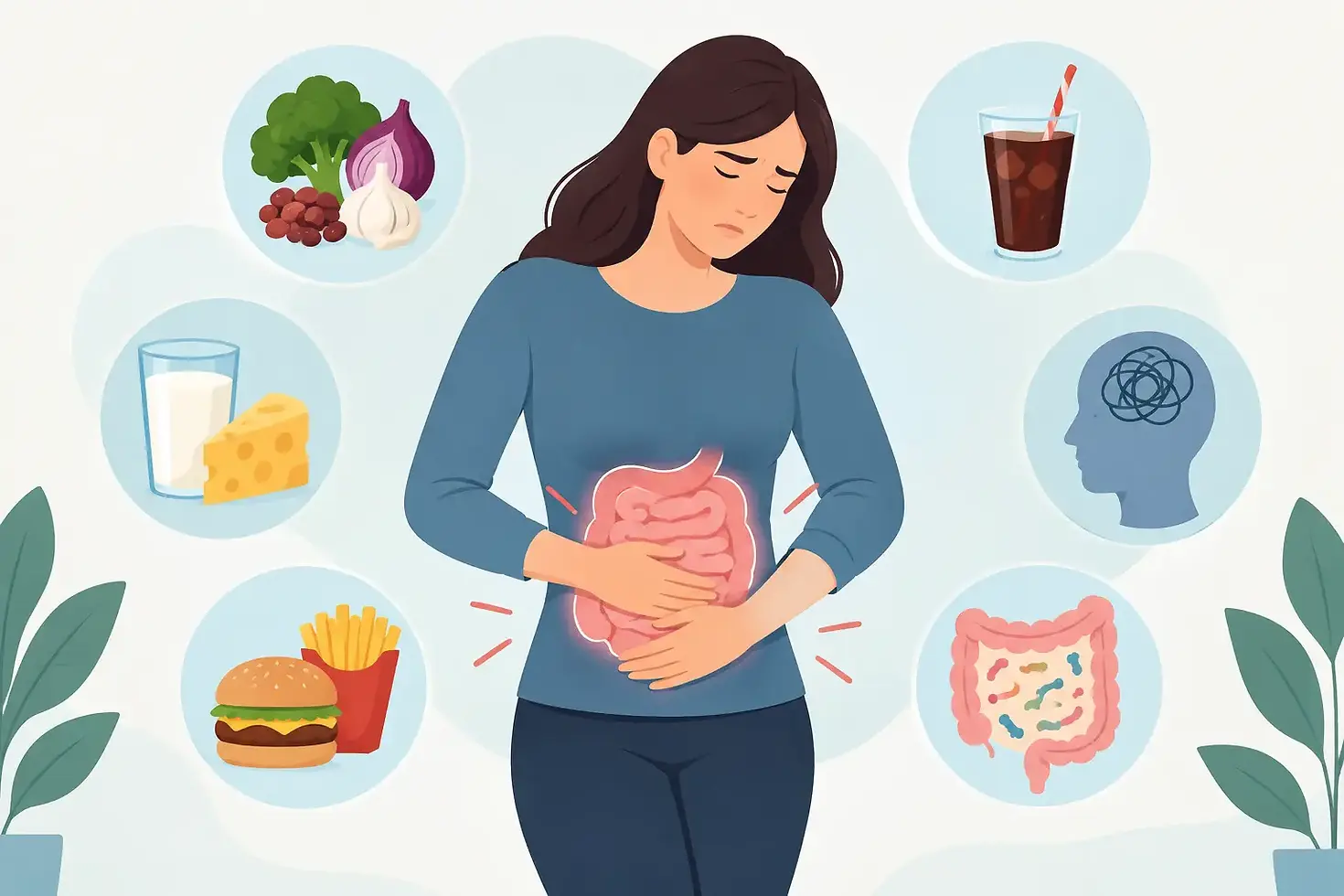
Certain foods commonly trigger bloating because they are harder to digest or are fermented by gut microbes. For some people, this includes onions, garlic, beans, wheat, dairy, apples, cruciferous vegetables, sugar alcohols, and carbonated drinks. Fermentation produces gas, which can create pressure and discomfort when the gut is sensitive or motility is slow.
But a food that causes bloating is not always the original problem. For example, someone may react strongly to healthy foods such as broccoli or lentils because bacterial balance has shifted, digestion is impaired, or the intestinal lining is inflamed. Simply blaming the broccoli misses the bigger picture.
Food sensitivities are different from immediate food allergies. They may show up hours or even days later as bloating, reflux, constipation, loose stools, headaches, joint pain, eczema, fatigue, or brain fog. Symptoms can be inconsistent, which is exactly why people struggle to identify their triggers through guesswork alone.
Constipation Can Cause More Than Infrequent Bowel Movements
Many people who say they are “not constipated” are still not fully eliminating. A daily bowel movement does not automatically mean healthy motility. If stools are hard, incomplete, difficult to pass, or you regularly skip days, waste may be sitting in the colon longer than it should.
That delay can increase fermentation, gas, pressure, and abdominal distension. It can also interfere with how the body processes and clears hormones, which may worsen symptoms around the menstrual cycle.
Constipation has many potential drivers: inadequate hydration, low fiber, too much fiber too quickly, poor bile flow, thyroid dysfunction, medication effects, mineral deficiencies, stress, pelvic floor dysfunction, and changes in gut bacteria. Adding more fiber may help some people and make others feel dramatically worse. The right strategy depends on why motility slowed in the first place.
Gut Bacteria, Yeast, and Small Intestinal Overgrowth
Your digestive tract contains a complex ecosystem of microbes. When that ecosystem becomes disrupted, food can be fermented in the wrong place or at the wrong rate. One common pattern involves an overgrowth of bacteria in the small intestine, where excess fermentation after meals may lead to bloating, belching, abdominal pain, diarrhea, constipation, or a combination of both.
Symptoms often worsen after carbohydrate-rich meals, but that is not enough to diagnose the issue. Similar symptoms can occur with other digestive conditions, food reactions, infections, or impaired enzyme production. This is where targeted testing and a full health history matter.
Overly aggressive cleanses and random antimicrobial supplements can backfire. They may irritate the gut, worsen symptoms, or fail to address the reason the imbalance developed. A more effective approach considers the microbial picture, stomach acid, digestive enzymes, bile, bowel regularity, inflammation, and the nervous system signals that regulate digestion.
Hormones, Thyroid Function, and the Monthly Bloat
If bloating predictably intensifies before or during a period, hormones may be part of the picture. Changes in estrogen and progesterone can affect fluid balance and slow bowel movement frequency. For some women, this is a mild monthly symptom. For others, severe bloating alongside heavy periods, pelvic pain, acne, mood changes, or fatigue deserves a more thorough evaluation.
Thyroid function can also affect digestion. When thyroid signaling is sluggish, the entire system may slow down, including stomach emptying and bowel motility. The result can be constipation, reflux, weight loss resistance, fatigue, cold intolerance, and bloating that does not respond to basic diet changes.
Being told that thyroid labs are “normal” does not always explain why symptoms continue. Functional evaluation looks beyond a single number and considers symptoms, nutrient status, inflammation, stress physiology, and the full thyroid pattern. No one should have to accept feeling miserable simply because they fall inside a broad reference range.
Stress Changes How You Digest
Digestion is not separate from your nervous system. When your body is stuck in a high-alert state, blood flow and signaling can shift away from efficient digestion. You may eat quickly, swallow more air, produce less digestive support, and experience slower or more irregular motility.
This does not mean bloating is “all in your head.” It means stress can be a real physiological contributor. Chronic stress, poor sleep, rushing through meals, and never allowing the body to shift into a rest-and-digest state can amplify an already sensitive gut.
Practical changes can help: sit down to eat, chew thoroughly, avoid eating while driving or working, and give yourself a few minutes of calm before meals. These habits are not a substitute for investigating persistent symptoms, but they can reduce one source of digestive strain.
When Bloating Needs Medical Attention
Bloating is common, but there are situations where it should not be managed with a supplement or elimination diet alone. Seek prompt medical evaluation for new or severe abdominal pain, vomiting, fever, black or bloody stools, unintentional weight loss, persistent loss of appetite, a hard swollen abdomen, or symptoms that wake you from sleep.
New, persistent bloating should also be assessed carefully in adults, particularly when it occurs with pelvic pain, urinary changes, feeling full quickly, or changes in bowel habits. The goal is not to create fear. It is to make sure serious conditions are not overlooked while you search for answers.
Stop Chasing One-Size-Fits-All Bloating Fixes
Peppermint tea, probiotics, digestive enzymes, magnesium, and low-FODMAP eating can each be useful in the right situation. They can also be the wrong tool. A probiotic that helps one person may worsen gas in another. Restricting fermentable foods may offer short-term relief but is not designed to be a permanent, universal diet. Even digestive enzymes need to match the digestive problem you are trying to solve.
The more productive question is not, “What supplement should I take for bloating?” It is, “What is making my digestion react this way?” That investigation may include looking at bowel habits, food patterns, medications, hormone symptoms, thyroid markers, nutrient status, inflammation, and specialty gut testing when appropriate.
At Your Functional Health Doctor, the goal is to move beyond symptom suppression and identify the patterns keeping you stuck. A personalized plan can address food reactions, digestive function, microbial imbalance, stress physiology, and the nutrient gaps that make recovery harder.
You are not failing because a generic diet did not fix your bloating. Persistent symptoms are not a character flaw, and they are not a reason to keep shrinking your food list. They are a reason to ask better questions, gather meaningful data, and give your body a plan built for its actual needs.


Comments